| Notes |
- Medical: age 50
Born August 14, 1884 at 8:00 PM at 120 Glebe Street, Glasgow.
Spoke Gaelic and English - see 1901 census
Learned the boat building business from his father-in-law. Was a carpenter by trade.
An Alex Henderson, joiner, from Glasgow, age 20 years 7 months, with $20, is listed on the SS Columbia ship manifest from Glasgow to New York April 8, 1905. See Ellis Island records
Info from Marg Buzzacott (hHenderson) and Angus Henderson:
"Came to New York from Scotland before the war with Roys, worked on the building of the Waldorf Astoria Hotel in New York. Also was a good singer - sang at Carnegie Hall in New York. Joined the 48th Highlanders of Canada (was a private in the 26th Battalion of the Canadian Infantry at time of marriage) for WWI."
Military:
1914Approximately January Joined the militia - 48th Highlanders of Canada - 18 months
1915July13 Enlisted with the Canadian Overseas Expeditionary Force in Niagara, Ontario. Regimental No.405617. 35th Battalion, “D” Company
October 25 Arrived in England on S.S. Metagama
1916March 8 Transferred to the 26th Battalion: New Brunswick Battalion, 2nd Canadian Division
March 9 Arrived in Le Havre, France
March 26 Joined unit in the field
September 27/28 Injured: “While on duty at the front at Courcelette, a piece of shrapnel hit him on the vertex of skull, causing compound fracture of skull. Right arm was paralysed. No loss of consciousness. …by a French mortar bomb…. Walked to dressing station about 4 days after”.2
October 4 No.10 General Hospital, Rouen - “dangerously ill”
October 8 “Struck off dangerously ill list”
October 15 Transferred to CCAC Shoreham-on-Sea, West Sussex, England
October 16 Admitted to Welsh Metropolitan War Hospital, Whitechurch near Cardiff, Wales
1917January 4 Transferred to Canadian Convalescent Hospital, Bromley, Kent (probably Bromley Park Hotel, 20 April 1915 – 31 August 1918. This was the first Canadian Convalescent Hospital in the Country.)
After discharge, returned to Rosneath, married. After marriage, the newlyweds lived next door to the Roys. Didn't sing after war because of injuries (his voice too much tremulo) nor could he do his carpentry work because one side of his body was paralyzed. Instead he got a job with a Brown Bros. book binding business in Toronto. Later he was made a foreman.
Letter from Cathie Matts Jan.25, 2002 states: "Uncle Alex had a lot of family here in Canada."
Was a good speaker. He had learned his Bible in Scotland and was saved in Canada.
He died of liver cancer in the old Christie hospital and son Angus said he turned yellow. His coffin lay open in the living room for about 2 days and then a contingent from the 48th Highlanders came and took the coffin away in a hearse.
From booklet on Dawes Road Gospel Church ("I Had a Dream")
"I noticed Mrs. Alex Henderson as my mind was forcibly brought back to the service at hand. She was seated with her daughters Alice and Margaret. Six year old Angus Henderson (we called him "deacon") was standing at the back with his dad. I noticed them and my heart went out in gratitude as I wonce more gazed upon the man who gave Dawes Road Mission a chance. It was in 1932 in Mr. Henderson's home that Ernest Ranney and I (John Russell) were able under God to keep the Gospel message alive in that neighbourhood. Others had lost faith. Others had quit but Brother Henderson experienceing the joy of salvation wasnted the neighbourhood to find Christ too. He gave the impetus to the work, allowing us to use his home on Dawes Road. It became crowded every Sunday afternoon with little children who wanted to learn of Christ and a blessed time was experienced; so much so, that we had to look for larger quarters."
Angus said his father was only saved about 5 years before he died. He had gone to the mission on Dawes Road; a Scottish man, Mr. Hay, spoke and Alexander got saved. He came home and threw out his pipes, tobacco and liquor; he was a changed man. His wife thought he had lost his mind. She didn't get saved for about 2 years. He revived the Friday night happy hour and usually had 30 - 40 kids. He build special benches and in their house, took down the French doors between the living and dining rooms to make on large room. The happy hour outgrew the house and it was moved to Dawes and Gower Avenue, which it outgrew. Then Dawes Road Associated Gospel church was built. Because of Angus's health, the family moved to Monarch Park. They then went looking for a church. They tried a Pentecostal church (Waves of Glory hymnbook), then Greenwood Gospel Hall where they stayed. The got a letter of commendation from Forward Baptist Church (which sponsored the Dawes Road Mission) to Greenwood.
Christie Street Veterans' Hospital
Christie Street at Melita Avenue
On this site stood the Christie Street Veteran’s Hospital, originally the National Cash Register Company Factory. In 1919 the factory was converted to the Military Orthopaedic Hospital. Although most of the soldiers had lost limbs in World War I (1914 -1918), a few residents had been disabled in the Boer War (1899 - 1902) and the Fenian raids of 1866. In 1936 the name was changed to the Christie Street Veterans’ Hospital. The influx of wounded veterans during World War II (1939 - 1945) caused overcrowding in the already inadequate facility. This led to the construction, in 1948, of Sunnybrook Hospital. The Christie Street building was then occupied by a seniors’ home, Lambert Lodge, named in honour of Padre Lt. Col. Sidney Lambert S.M. O.B.E., a veteran of both World Wars. Demolished in 1981, it made way for the construction of the Christie Gardens Apartments and Care facility.
Toronto Historical Board, 1996
|

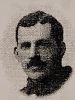
 1884 - 1935 (50 years)
 [8]
[8]